
Duckworth Lewis Stern Method Explained: How Rain Changes A Cricket Target
The DLS method turns overs and wickets into resources and rewrites the target from there. The arithmetic, the two editions, the par score and the minimum overs rule, set out plainly.
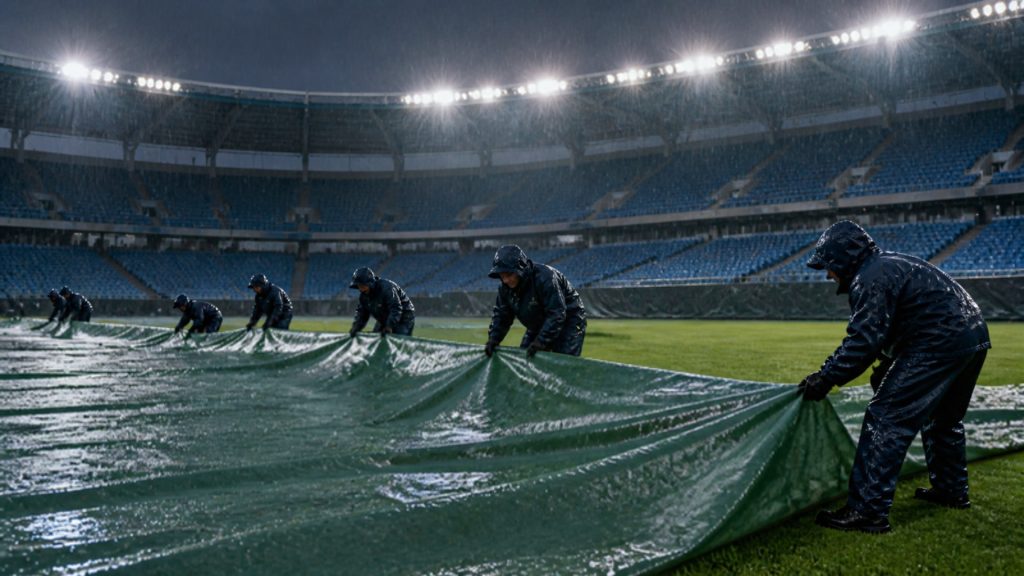
Rain does not stop a limited overs match so much as rewrite it. When overs are lost, somebody has to decide what the side batting second now has to score, and that number has to be fair to a team that has already batted and cannot bat again. The Duckworth Lewis Stern method, almost always shortened to DLS, is the piece of arithmetic that does it.
It is not a formula most spectators can run in their heads, and it was never meant to be. What it can be is understood, and the logic underneath it is simpler than the output suggests.
The Problem DLS Was Built To Solve
Before 1997 the common fix was the average run rate, or the most productive overs rule. Both broke in public. The most notorious example came in the 1992 World Cup semi-final at Sydney, where rain left South Africa needing 22 from 13 balls and the rule in force handed back a revised target of 22 from one ball. Nobody argued that the side had been treated fairly. They argued about how a sport had allowed a rule that could produce it.
Two English statisticians, Frank Duckworth and Tony Lewis, published a method based on a different idea, and it was introduced in 1997. The International Cricket Council adopted it formally in 1999. After both men retired, the Australian statistician Steven Stern took over as custodian and the method was renamed Duckworth Lewis Stern in November 2014.
Two Resources, Not One
The whole method rests on one observation. A batting side does not simply own a number of overs. It owns two things at once, and both of them get spent.
- Balls remaining. In a fifty over innings, 300 of them.
- Wickets in hand. Ten of them.
Together those two make up one hundred per cent of a side’s resources at the first ball. Everything that happens in the innings reduces that figure. A ball bowled takes a little off. A wicket takes a lot more off, and it takes more off early than it does late, because a side four down with twenty overs left has fewer ways to accelerate than a side none down with twenty overs left.
Why A Wicket Costs More Than An Over
This is the part that makes DLS feel counter-intuitive to anyone watching the scoreboard rather than the resource table. Two teams can be on the same score after the same number of overs and have wildly different resources left. The team that is two down is, in the method’s terms, considerably richer than the team that is seven down, and the revised target will say so.
It is also why a side chasing in a shortened game is sometimes handed what looks like a generous target and still loses comfortably. The target was set for a side with wickets in hand. Losing them early is not something the method is required to compensate for.
The Calculation, In One Line
At the top level the method uses what is called the Professional Edition, and the target is set in direct proportion to the two sides’ resources:
Team 2 target = Team 1 score x (Team 2 resources divided by Team 1 resources), with one run added to make it a target rather than a tie.
Suppose a side posts 280 having used all of its resources, so Team 1 is on 100 per cent. Rain then cuts the chase so that Team 2 has only 76 per cent of a full innings available. The scaling gives 280 multiplied by 0.76, which is 212.8, so the revised target is 213 and 212 would tie. Those resource figures come from the method’s own tables and software rather than from anything a viewer can reconstruct, which is why the numbers arrive on screen rather than being worked out in the commentary box.
Standard Edition And Professional Edition
There are two versions in use, and they are not interchangeable.
| Feature | Standard Edition | Professional Edition |
|---|---|---|
| Where it is used | Club and lower level cricket, and as a fallback when no computer is available | International and first class cricket |
| How it is run | A published table of resource percentages, worked by hand | Licensed software, with the current ICC calculator distributed to officials |
| High first innings scores | Uses an average score constant, known as G50, when the chasing side has more resources | Scales directly against the first innings score itself |
| In use since | 1997 | 2004, updated to the Stern edition in 2014 |
The practical difference shows up in high scoring games. The Standard Edition treats a par total as roughly fixed, which under-reacts when a side has just made 390. The Professional Edition takes the actual first innings score as its anchor, which is the main reason it replaced the original at elite level.
The Par Score, And Why It Keeps Moving
During a chase, officials hold a par score for every ball and every wicket position. It is the score the chasing side would need to be level if the match were abandoned at that moment. It is not a target. It moves up as balls are bowled, and it jumps up when a wicket falls, because losing a batter has just made the remaining resources less valuable.
A side one run above par when the covers come on wins. A side level with par ties. This is the number captains are actually chasing in a wet game, and it explains the otherwise strange sight of a batting side blocking out an over to stay ahead of a figure nobody in the crowd can see.
What DLS Does Not Try To Do
The method makes no judgement about pitch conditions, dew, the quality of the attack, or who was batting well. It is deliberately blind to all of it. Its only inputs are overs, wickets and the first innings score, which is both its fairness and its limit. Nobody has produced a better general rule that survives contact with the public, which is the real test for a cricket law.
The Minimum Overs Rule
DLS can only do its work if there is enough cricket to work with. Under ICC playing conditions a limited overs match needs a minimum number of overs bowled to the side batting second before any result can stand:
| Format | Minimum for a result |
|---|---|
| One day international | 20 overs per side |
| Twenty20 international | 5 overs per side |
Below that the game is a no result, whatever the par score says. Individual competitions can and do set their own minimums, and a knockout fixture will often carry a reserve day instead.
How To Read A DLS Finish
Three questions answer almost every argument about a rain hit game. How many overs did each side actually get. How many wickets did the chasing side have standing when play stopped. Was the first innings score high enough for the edition in use to matter. Answer those and the revised number stops looking arbitrary.
Rules like this are rarely loved, and they are not supposed to be. They are supposed to be defensible, and after nearly thirty years DLS still is. If you want the other end of the same argument, the laws that decide matches without any weather at all, our pieces on the offside rule in football and the Formula 1 points system work the same way: a single clause doing far more than anyone notices.
How This Page Is Kept
Figures and clauses on this page were checked against the governing body’s published rules on the date shown above. When a law or a record changes we update the page and move that date. Corrections go to [email protected] and are dealt with first.